Compare bottle air-rinsing arrangements
Compare practical options for bottle air-rinsing equipment, including what each route needs, where it fits and what to check before you decide.
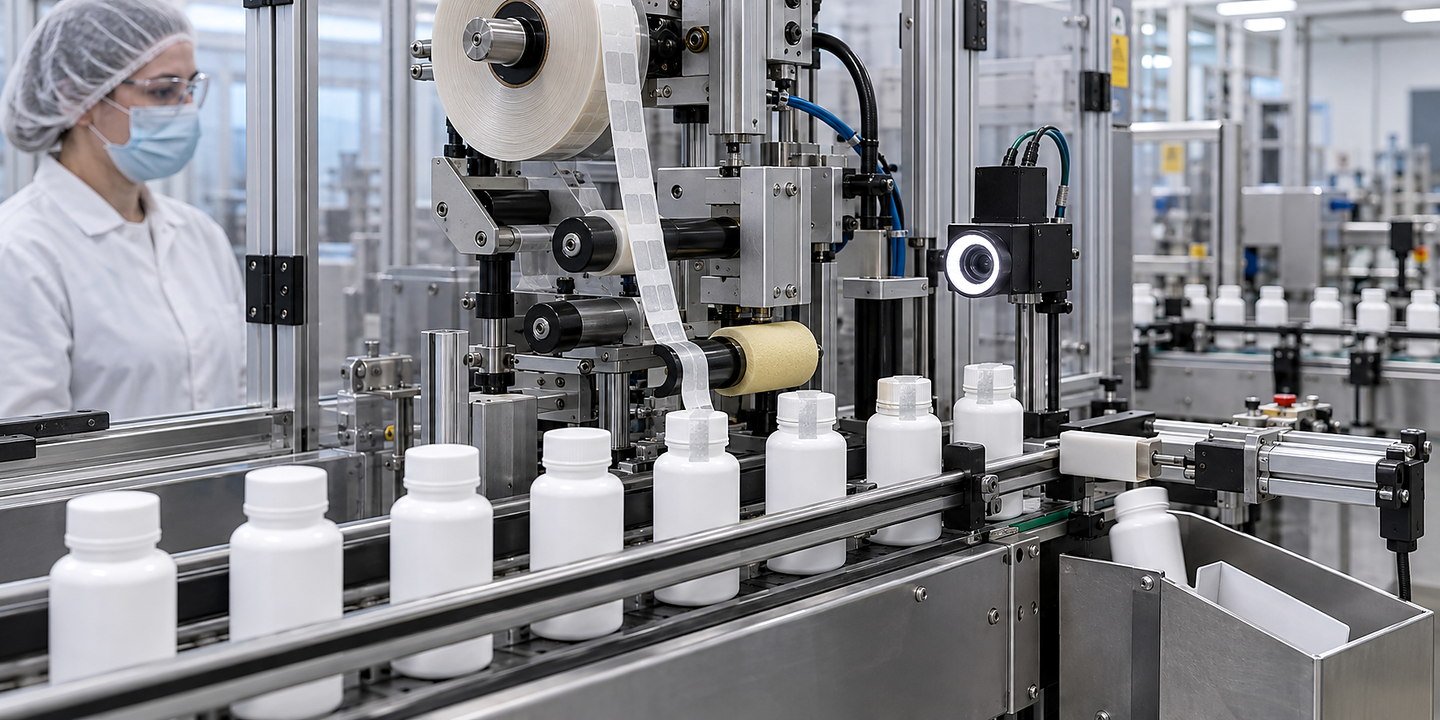
Illustrative bottle-labelling scene.
The right solution for bottle air rinsers is the simplest system that reliably handles your stated duty, line connections and expected exceptions.
Plan bottle air rinsing around the incoming empty bottles, point-of-use air, debris removal and handling before filling. Discuss the required cleaning result and line connections with Lancing using representative samples.
See how the complete system fits your production line — Bottle Air Rinsers
Plan bottle air rinsing around the incoming empty bottles, point-of-use air, debris removal and handling before filling. Discuss the required cleaning result and line connections with Lancing using representative samples. When you compare solutions, check how each option handles bottle air-rinsing equipment product behaviour, bottle geometry and format range and your surrounding line.
Discuss your application

Start with the path out of the bottle
An air jet can move loose material, but a useful rinsing arrangement must also give it somewhere to go. Compare the bottle opening, nozzle position and debris collection together; a strong jet is not, by itself, evidence that contamination has left the container.
Inverted bottles
Presenting the opening downwards can give displaced particles an exit route. Check whether the neck, shoulder and base remain securely supported during inversion and return. A grip that works on a rigid round bottle may distort a lightweight shaped container. Include the smallest neck opening and the least stable empty bottle in the handling review.
Upright or constrained handling
Where inversion is impractical, ask how the proposed nozzle and collection arrangement remove material rather than redistribute it inside the bottle. Observe the outlet and surrounding area during a trial. Consider whether debris from one bottle could settle into the next or reach the filling point.
Air rinse or a wet process?
Dry air rinsing is a route to assess for loose particulate contamination. Sticky deposits, residues from previous contents or an agreed microbiological treatment require a different cleaning assessment. Do not use a successful dust-removal test as evidence of sterilisation or of suitability for returnable bottles.
Use failed bottles to identify the next test
- Particles remain around a shoulder: review nozzle access, the actual airflow path and bottle orientation before merely increasing pressure.
- Material is visible outside the bottle: inspect collection and extraction, nearby open containers and the route into the filler.
- Bottles become marked or distorted: separate the cleaning result from the grip, guide and transfer assessment.
- Results change during production: compare incoming bottle condition and point-of-use air conditions with the recorded trial setup.
Agree what will be inspected, how the before-and-after condition is recorded and which result requires a hold or investigation. Repeat the assessment after a representative format change. Use the selection guide for the equipment comparison and discuss the unresolved cleaning decision.
Help us give you useful guidance
- Representative Empty-Bottle SamplesInclude normal incoming bottles and the difficult formats or contamination examples agreed for the trial.
- Before-and-After Empty-Bottle Cleaning ResultsRecord the bottle format, starting condition and inspection method, with failed or damaged examples for investigation.
- Changeover and Cleaning ObservationsInclude the current revision and explain what this information should show for your operation.