Current condition
Record how the bottles arrive, the material present before rinsing and the method used to inspect the result. Keep the starting condition and any limits of the checking method with each sample record.
What evidence should be agreed before acceptance testing for bottle air rinsers?
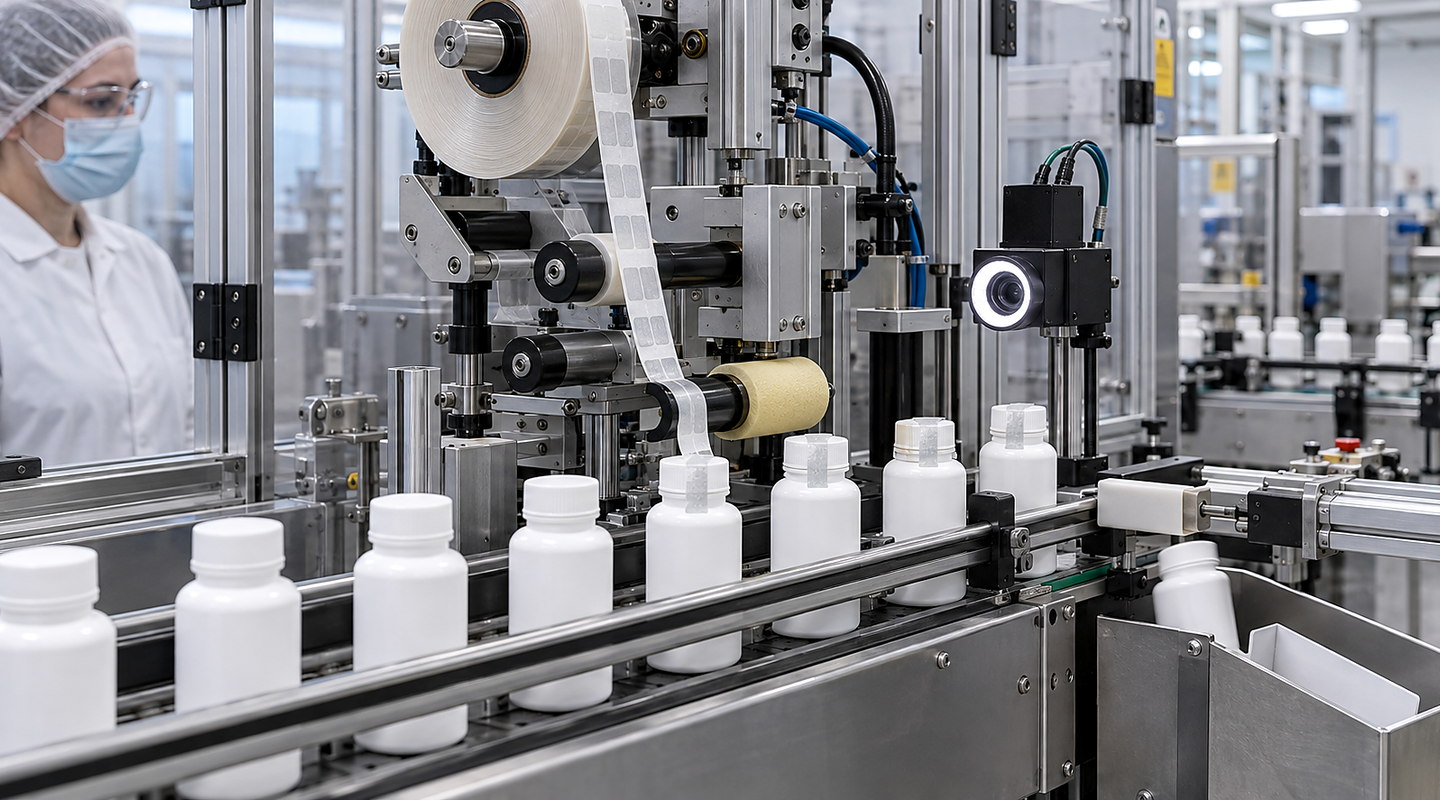
Illustrative bottle-labelling scene.
Agree the required empty-bottle cleaning result before the trial. Record the starting contamination, bottle formats, point-of-use air and debris-removal arrangement, then define the checking method, acceptable result and response to a failure.
Include representative normal and difficult bottles, the intended bottle flow, short stops and format changes. Repeat the agreed cleaning-result and handling checks across that range rather than treating one successful transfer as proof of the whole process.
Keep the trial conditions and results together: identify the bottle and incoming condition, the setup used, the before-and-after check and any failed or damaged examples. Agree which results allow the trial to continue and which require a hold or investigation.
Discuss your application

Record how the bottles arrive, the material present before rinsing and the method used to inspect the result. Keep the starting condition and any limits of the checking method with each sample record.
Include intended bottle materials and geometries, normal and difficult incoming conditions, and the production and changeover states to be demonstrated. Agree the examples and repetitions before the trial.
Record the bottle-handling and air-delivery setup, the debris-collection route and any changes made during the trial. Repeat the relevant cleaning-result and transfer checks after a format or setup change.
Record how bottles arrive and which loose material is present before the trial. Use representative samples and identify any residue or other condition requiring a separate cleaning assessment.
List every intended bottle format, neck opening, shoulder and base geometry, with handling and inversion constraints. Include the formats that change so the trial is not limited to the easiest bottle.
Define the cleanliness criterion and the method used to compare before-and-after condition. Agree acceptable results and records with the responsible team before the trial; bottle transfer alone is not the cleaning-result check.
Record bottle flow, production duration, short stops and restarts used in the trial. Check the cleaning result and transfer at those agreed conditions rather than assuming one bottle flow represents the whole operating range.
Record the format settings, change parts and access needed to inspect and clean the proposed arrangement. Repeat the agreed cleaning-result and transfer checks after changing to another bottle format.
Agree which result triggers a hold or investigation, who decides the next step, and which cleaning-result and restart checks must be repeated. Retain failed and damaged bottle observations with the trial record.