Incoming Bottle Condition and Contamination
Describe how empty bottles arrive, the loose material to remove and any sticky residue or other condition needing a different cleaning assessment. Include representative normal and difficult bottles.
Tell Lancing about your empty bottles, incoming contamination, required cleaning result and bottle flow to discuss suitable air-rinsing options.
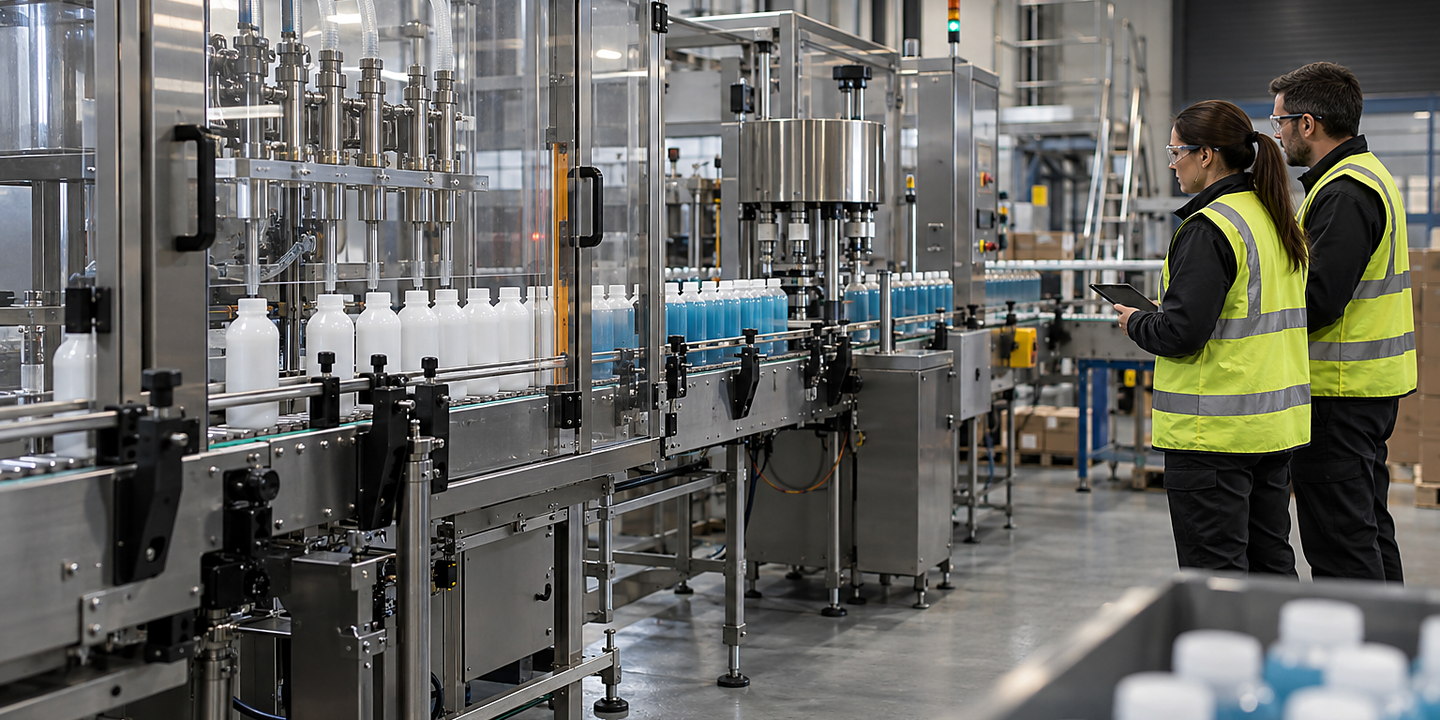
Illustrative bottling-line scene.
Tell us what you need to achieve with bottle air rinsers, and include any samples, drawings or production information you already have.
If something is uncertain about routine production using bottle air-rinsing equipment, we can identify the right survey or trial before you commit to a final solution. Use the email link for photographs or drawings; this form has no upload field. Agree physical sample delivery separately.
Plan bottle air rinsing around the incoming empty bottles, point-of-use air, debris removal and handling before filling. Discuss the required cleaning result and line connections with Lancing using representative samples. Share the conditions around routine production using bottle air-rinsing equipment so the first response can focus on the right technical questions.
Discuss your application

01494 623015
sales@
Lancing Ltd · Company 12778496
Registered office: Department 133, 5 High Street, Maidenhead SL6 1JN, United Kingdom
Describe how empty bottles arrive, the loose material to remove and any sticky residue or other condition needing a different cleaning assessment. Include representative normal and difficult bottles.
Provide bottle material, neck opening, shoulder and base geometry, dimensions and stability, plus the formats that change. Explain constraints on inversion, gripping, guides and transfers.
State the agreed cleanliness criterion, how the before-and-after condition will be checked, which examples will be trialled and what result requires a hold or investigation.
Give the required bottle flow, normal production pattern, short stops and format-change frequency, with infeed and filler connections.
Identify available point-of-use air conditions, proposed air delivery and collection or extraction route. Include cleaning access and how removed debris is kept away from open bottles and the filling point.
Describe change parts, bottle-handling limits and cleaning access. Agree repeated cleaning-result, transfer, stoppage and recovery checks across the intended bottle formats.