Bottle Air Rinsers Selection Guide
Compare air-rinsing route with liquid-rinsing route. Use the same application conditions and record what each proposal includes, excludes or still needs to prove.
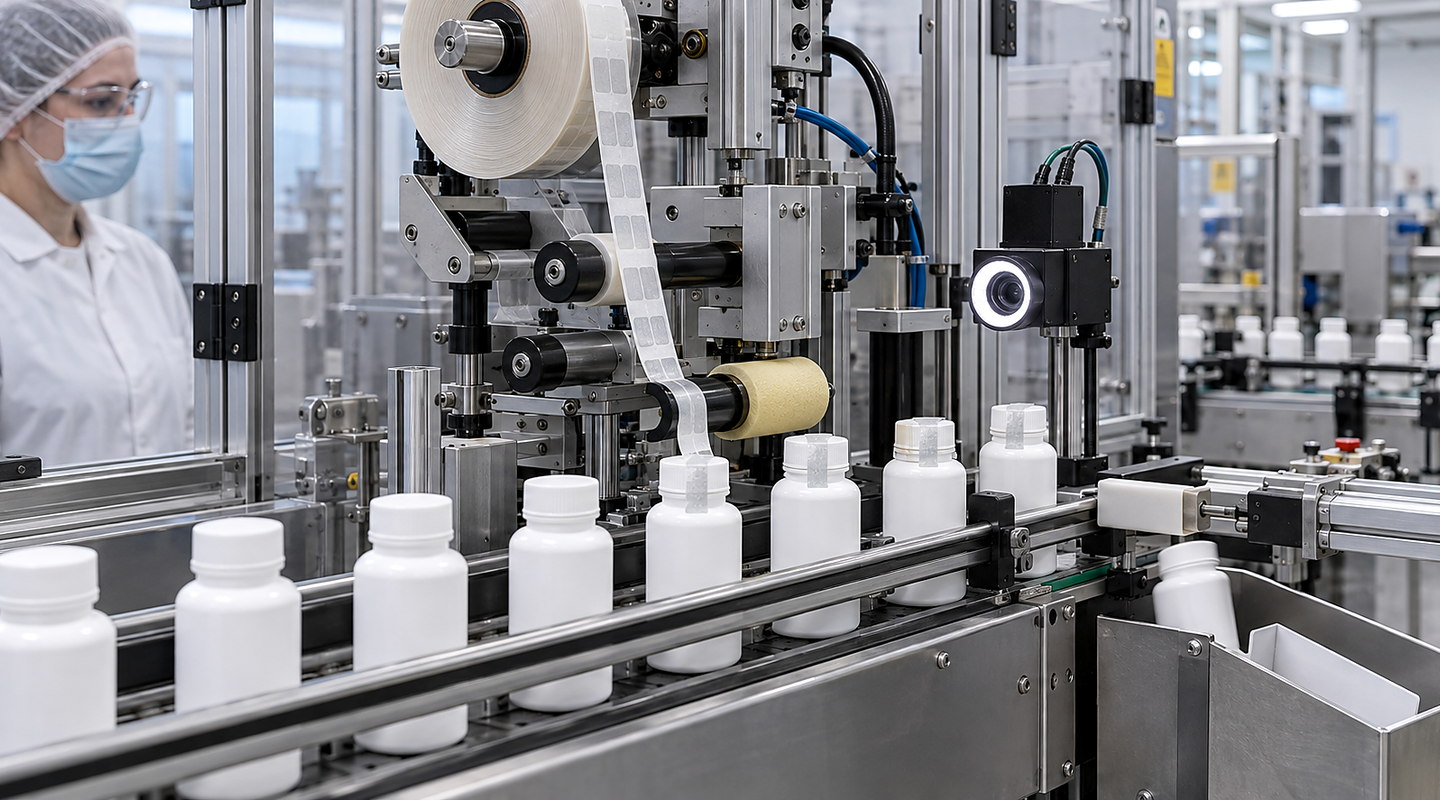
Illustrative bottle-labelling scene.
Prove the cleaning result, point-of-use air and handling before selection. Assess liquid compatibility, drainage and any drying step; do not assume it is interchangeable with air rinsing.
For routine production using bottle air-rinsing equipment, a short trial that reproduces the difficult condition is often more useful than a long list of nominal specifications.
Compare options in the conditions where they must work — Bottle Air Rinsers
Plan bottle air rinsing around the incoming empty bottles, point-of-use air, debris removal and handling before filling. Discuss the required cleaning result and line connections with Lancing using representative samples. A useful shortlist should show how every option copes with bottle air-rinsing equipment product behaviour and cleaning, access and changeover method.
Discuss your application
Ask every supplier the same questions
| Decision to resolve | Evidence to compare |
|---|---|
| What has to be removed? | Incoming bottle condition and agreed contaminant examples. |
| Can air reach the inside of every bottle? | Neck, shoulder and internal geometry drawings. |
| How will debris leave the process? | Debris collection route and cleaning access. |
| What air supply does the application need? | Point-of-use air requirements and site confirmation. |
| How are bottles transferred to the filler? | Bottle tracking, stoppage and discharge observations. |
| What changes between bottle formats? | Change-parts list and repeated cleaning-result records. |
Include simpler approaches to bottle air-rinsing equipment in your shortlist
| Route to assess | When it belongs in the comparison | Deciding check |
|---|---|---|
| Air-rinsing route | An agreed loose-contamination problem and bottle geometry can be addressed by the proposed air and debris-removal arrangement. | Prove the cleaning result, point-of-use air and handling before selection. |
| Liquid-rinsing route | The product and packaging process calls for an approved liquid treatment. | Assess liquid compatibility, drainage and any drying step; do not assume it is interchangeable with air rinsing. |
Pause before choosing when…
- Only perfect or hand-selected examples of routine production using bottle air-rinsing equipment are available.
- No one has defined how empty-bottle cleaning checks and failed-result response will be evaluated.
- The normal range for bottle air-rinsing equipment product behaviour is described only as “usually fine” but has not been bounded.
- Your operator, cleaning, maintenance or recovery access has not been considered.
- Quoted performance depends on another machine or data source that is not included.