Routine Production Using Bottle Air-Rinsing Equipment
Plan routine production using bottle air-rinsing equipment around representative products, packs and packaging materials, line connections, operating limits, acceptance checks and next steps.
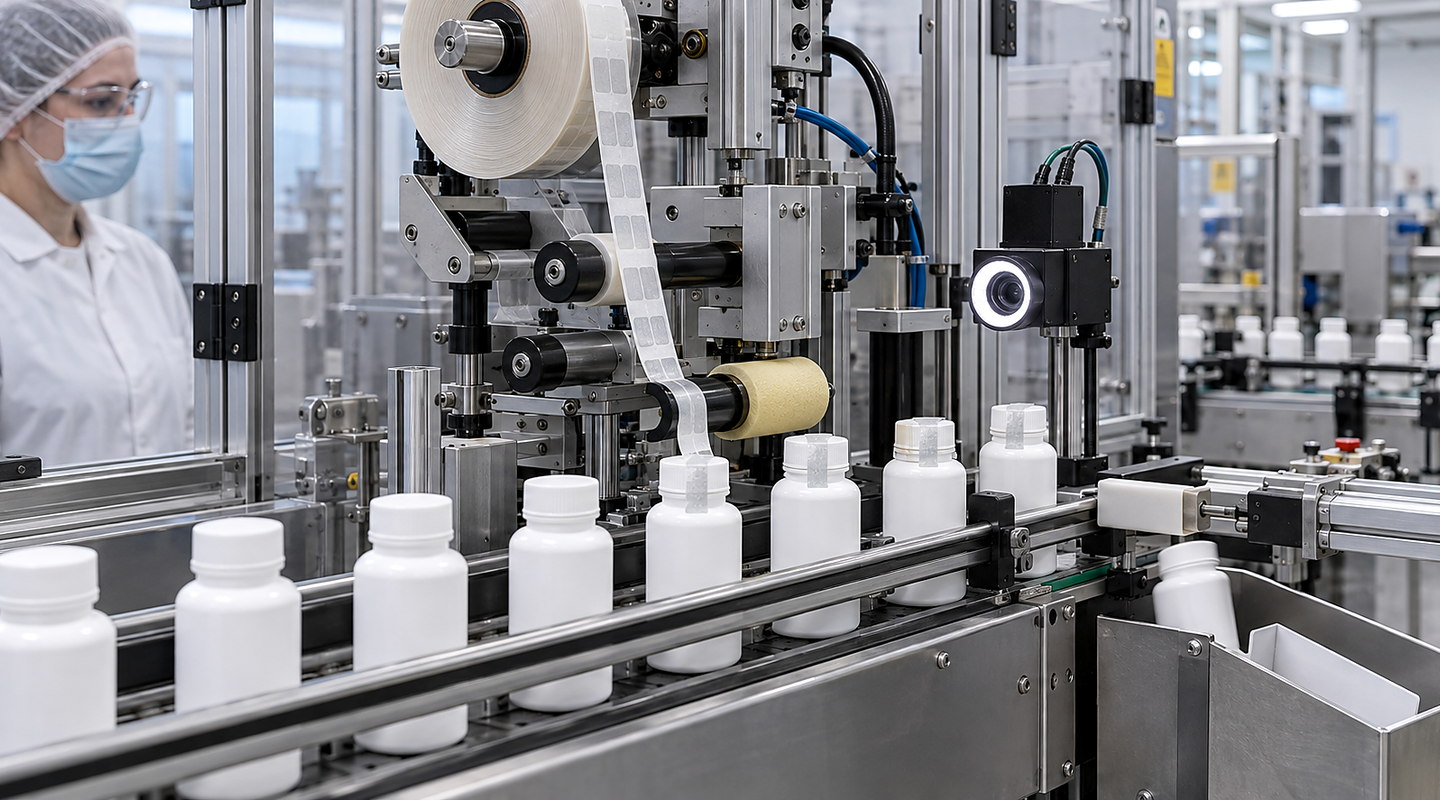
Illustrative bottle-labelling scene.
In brief
For routine production using bottle air-rinsing equipment, start with representative products, packs and packaging materials and your full operating sequence, then check the credible product, pack, cleaning and line-rate extremes before committing to a final layout.
Plan bottle air rinsing around the incoming empty bottles, point-of-use air, debris removal and handling before filling. Discuss the required cleaning result and line connections with Lancing using representative samples.
On the production floor
Plan for the conditions your team handles every day — Bottle Air Rinsers
Plan bottle air rinsing around the incoming empty bottles, point-of-use air, debris removal and handling before filling. Discuss the required cleaning result and line connections with Lancing using representative samples. For routine production using bottle air-rinsing equipment, the deciding details include incoming bottle condition and contamination, the required empty-bottle cleaning result and empty-bottle cleaning checks and failed-result response.
Details worth resolving early for routine production using bottle air-rinsing equipment
Question 1
Incoming Bottle Condition and Contamination
Record how bottles are stored, unpacked and presented to the rinser, and identify the loose particles to remove. Include normal incoming samples and difficult contamination examples; attached residues may need a different cleaning assessment.
Question 2
Bottle Geometry And Format Range
Supply the bottle range, including neck openings, shoulders, height and stability when empty. Include the smallest neck and the least stable format so nozzle access, supports and bottle handling can be assessed.
Question 3
Required Empty-Bottle Cleaning Result
Agree the contamination to remove, the inspection method and the acceptance limits before the trial. Keep before-and-after results and a record of failed or damaged bottles; a visually clean bottle does not establish every hygiene requirement.
Question 4
Required Output and Production Pattern
State the required flow of acceptable bottles into the filler and the normal loading, stopping and restarting pattern. Assess the complete handling and cleaning sequence with the agreed checks, rather than relying on a catalogue maximum.
Question 5
Cleaning, Access and Changeover Method
Record the operating settings and the guides, holders and nozzles used for each format. Review access for cleaning the collection or extraction area, the empty-bottle path and the adjustments needed before a clean restart.
Question 6
Empty-Bottle Cleaning Checks And Failed-Result Response
Agree how failed cleaning results are identified, held and investigated, and who reviews the record. Include the intended response to loss of air or extraction, missing bottles and a blocked discharge in the line trial.
Your operating cycle
Plan for more than automatic running
Include replenishment, normal production, planned change, short stops, fault recovery, cleaning and maintenance for routine production using bottle air-rinsing equipment. A fast automatic step can still leave your team with a slow or awkward overall process.
Normal production and variant changes
Replenishment and material presentation
Operator access and safe interventions
Cleaning, maintenance and recovery
Prove the result
Test routine bottle air rinsing with representative bottles and agreed contaminants
Normal production
Run the agreed product or part mix for routine production using bottle air-rinsing equipment at your intended operating pattern.
Difficult conditions
Include credible extremes for bottle air-rinsing equipment product behaviour and bottle geometry and format range.
Fault and recovery
Show how the proposed solution detects a problem affecting routine production using bottle air-rinsing equipment, responds safely, informs your team and restarts under control.
Important limits
Be clear about what the trial has shown
The selected method must be trialled with representative product and packaging.
Supplier tolerances and product-condition changes can alter bottle handling or the cleaning result.
Equipment selection does not replace product, hygiene, packaging or regulatory validation.